
October 2, 2026
Remote Live Production for Sports: Complete Guide
Remote live production has fundamentally changed how sports broadcasts are made. This complete guide explains the technology, the workflow and the benefits for every type of sports organisation.
What Is Remote Live Production for Sports?
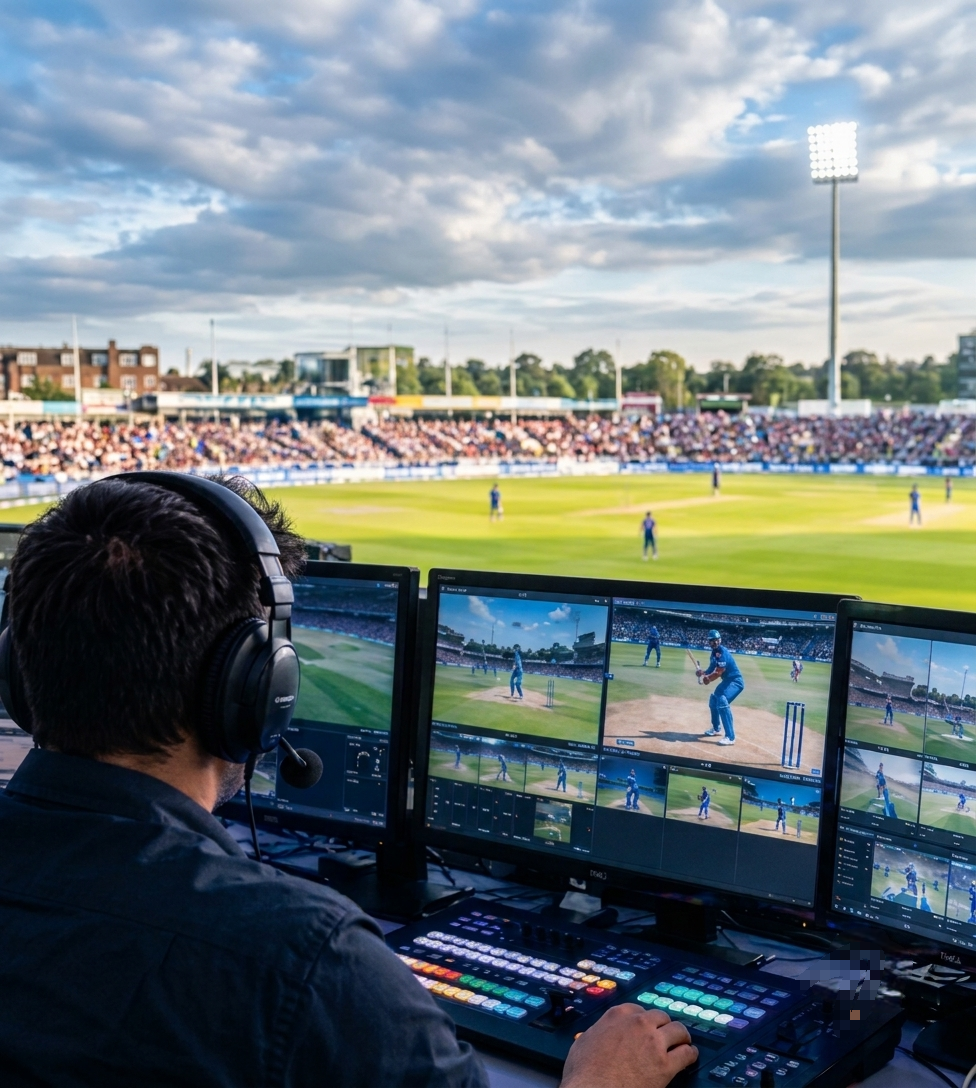
Remote live production for sports is the practice of producing a live broadcast of a sporting event from a location separate from the venue. Rather than deploying a full outside broadcast unit and crew to the event, the production infrastructure is centralised at a permanent hub facility. Live signals from the venue are transmitted to the hub and the broadcast is assembled there.
This approach is now the foundation of broadcast operations for major sports networks and has become the standard model for forward-thinking leagues and federations at every level. SMW Remote has built its entire production model around remote live production, enabling consistent broadcast quality across multiple events and markets.
The Technology Behind Remote Live Production
Remote live production relies on a combination of signal transport technology, production infrastructure and connectivity. At the venue, cameras capture the event and their signals are encoded using contribution codecs designed for low latency and high quality. These encoded signals are transmitted over fibre, dedicated internet connections or bonded cellular networks to the production hub.
At the hub, the signals are decoded and presented to the production team on the same monitoring infrastructure they would use in a traditional gallery. Software-defined production switchers, server-based replay systems, IP audio routing and cloud-based graphics engines give the production team full control of the broadcast output.
Remote Live Production Workflow
The workflow begins well before event day with pre-production: technical design, graphics build, commentary preparation and signal path testing. These pre-production activities are critical to a smooth event day and SMW Remote treats them with the same rigour as the broadcast itself.
On event day, the hub goes live ahead of the event start for technical warm-up and pre-event coverage. During the event, all production functions operate continuously from the hub. After the event, highlights and clip packages are produced for downstream distribution.
Video Signal & Camera Management
Managing video signals in a remote production environment requires careful attention to latency, quality and redundancy. SMW Remote uses contribution-grade encoding for all camera signals, maintaining broadcast quality across the transmission chain. All signal paths are monitored in real time, with automatic failover systems that switch to backup paths if a primary signal degrades.
Camera control is managed from the hub, where the director and vision mixer work with the full complement of camera feeds. In some configurations, remote camera control units allow the hub team to make optical adjustments to cameras at the venue without a dedicated operator at each position.
Audio & Commentary Production
Audio in remote live production covers two distinct streams: the programme audio from the venue — crowd noise, referee calls, player audio — and the commentary produced at the hub. Both need to be managed with care and combined into a finished audio mix that serves the viewer.
Commentary is produced from professional broadcast booths at the production facility. Commentators receive a clean video feed with correctly timed audio. The IFB system keeps them connected to the production director throughout the broadcast. Commentary audio is mixed by the hub's audio engineer and returned to the broadcast chain as a finished mix.
Live Graphics & Scoring
Graphics are operated entirely from the production hub. Sport-specific template sets are built in pre-production — scoreboards, name bars, statistics, lower thirds and promotional graphics. During the event, graphics operators call each element under direction from the production director.
Where live data feeds are available, integration allows scores and statistics to update automatically, reducing manual input and improving accuracy. SMW Remote has built custom data integrations for several leagues operating their own scoring platforms.
Instant Replays & Highlights
Replay is one of the most time-sensitive operations in sports production. SMW Remote uses server-based systems that record all camera feeds simultaneously and allow operators to locate and call up any moment within seconds. Variable-speed slow motion from full speed down to slow crawl gives the director full creative control over replay presentation.
During the event, replay operators continuously build a structured clip library of key moments. At the end of the event, this library provides the basis for highlights packages formatted for broadcast, OTT and social media.
Streaming & Broadcast Distribution
The final broadcast output from the production hub is encoded for distribution via multiple paths simultaneously. Television contribution feeds go to broadcast partners via satellite or fibre. Live streams are encoded at multiple bitrates and delivered to OTT platforms and digital channels via CDN.
SMW Remote manages the complete distribution chain, including geo-restriction management, rights protection and real-time monitoring of all distribution endpoints. This end-to-end management ensures that the broadcast quality maintained through production is preserved all the way to the viewer.
Remote Live Production vs Traditional Production
Traditional outside broadcast production deploys significant equipment and crew to every venue — an OB truck, satellite uplink, a large on-site team. This delivers excellent results but at a cost that is unsustainable for leagues with frequent fixtures or organisations with limited budgets.
Remote live production replicates the creative capability of traditional OB at a fraction of the operational cost. The on-site footprint is reduced to cameras, connectivity equipment and a small technical team, while all production functions are centralised at the hub. The broadcast output is equivalent in quality; the operational model is fundamentally more efficient.
Benefits for Broadcasters
For broadcasters, remote live production reduces the per-event cost of sports coverage significantly. The same hub infrastructure can be used across multiple events simultaneously, and the centralised team can cover back-to-back fixtures without the travel time that traditional OB requires.
Remote production also enables broadcasters to cover more events than their traditional OB fleet would allow. Leagues that previously had fewer matches broadcast can now have every fixture covered, increasing content volume and viewer engagement.
Benefits for Sports Leagues & Rights Holders
For leagues and rights holders, the most important benefit is the ability to broadcast every match rather than a selection. Full broadcast coverage across the season creates richer audience data, higher sponsor value and a more compelling proposition for broadcast rights buyers.
Remote live production also delivers a consistent broadcast standard across every fixture — regardless of venue quality or location. This consistency is important for building a league's broadcast identity and for the confidence of sponsors and broadcast partners.
Getting Started with Remote Live Production
Getting started with remote live production begins with a production assessment — understanding the connectivity available at your venues, the camera configuration required for your sport and the distribution platforms you need to reach. SMW Remote conducts this assessment as part of our onboarding process.
From the assessment, we develop a production specification and begin the pre-production process. For most events, a production can be designed, tested and delivered within a few weeks of the initial brief. For organisations planning a full season, the lead time allows for thorough preparation across all venues and fixtures.
Frequently Asked Questions
What is remote live production for sports?
Remote live production for sports is a broadcast model where camera signals from the venue are transmitted to a central production hub, where the full broadcast is assembled by a production team operating remotely. The finished broadcast is then distributed to TV and streaming platforms.
How does remote live production work?
Cameras and connectivity equipment at the venue transmit live signals to the production hub over IP, fibre or bonded cellular. The hub-based production team manages all broadcast functions — switching, commentary, graphics, replays and distribution — in real time.
What technology is needed for remote live production?
Remote live production requires contribution-grade signal encoding and transmission, production switching infrastructure, server-based replay systems, IP audio routing, graphics engines and broadcast-quality monitoring at the hub. SMW Remote provides all of this infrastructure.
How does commentary work in remote live production?
Commentators work from professional booths at the production hub, receiving a clean broadcast feed with correctly synchronised audio. IFB communication keeps them connected to the production director. Their commentary is mixed into the broadcast chain by the hub's audio engineer.
Can remote live production support multiple languages?
Yes. Multiple commentary tracks in different languages can be produced simultaneously from the same hub, each mixed and delivered as a separate audio service within the broadcast output. This allows content to be distributed across multiple language markets from a single production.
Work with us
Ready to work with SMW Remote?
Talk to our team about your next production, broadcast, or sponsorship project.
Get in Touch →